" A LITTLE MISS CLUMSY - INTRODUCTION TO DEVELOPMENTAL COORDINATION DISORDER" By Dr. Vandana Patel

“Developmental
Coordination Disorder (DCD) is a term used to describe children who exhibit
motor coordination skills below that expected for their chronological age and
intellect and which are not attributable to medical disorders.”
- American
Psychiatric Association (APA), 2000.
Diagnostic criteria:
DSM-5
- Acquisition and execution of coordinated motor skills are below what would be expected at a given chronological age and opportunity for skill learning and use; difficulties are manifested as clumsiness (e.g. dropping or bumping into objects) and as slowness and inaccuracy of performance of motor skills (e.g. catching an object, using scissors, handwriting, riding a bike, or participating in sports)
- The motor skills deficit significantly or persistently interferes with activities of daily living appropriate to the chronological age (e.g. self-care and self-maintenance) and impacts academic/school productivity, pre-vocational and vocational activities, leisure, and play
- The onset of symptoms is in the early developmental period.
- The motor skills deficits cannot be better explained by intellectual disability or visual impairment and are not attributable to a neurological condition affecting movement (e.g. cerebral palsy, muscular dystrophy, or a degenerative disorder)
-Amanda Kirby et al, DSM V, APA, 2013
Epidemiology:

Lingham R, 2009 and Rainer Blank, 2011.
Etiology:

Clinical
features:
PRESCHOOL
• Delay in gross and fine motor
development
• Bump into obstacles
• Frequent falling
• Eating habits
• Have difficulty in pencil grip or
using scissors
• Weak in building blocks and jigsaw
puzzles
• Fail to judge distance
• Difficulty in playing physical games
& difficulty in learning new physical activities
• Fall over easily when walking or
running
• poor skills in handling pencil
• Slow at copying and writing
• Messy and untidy handwriting
• handicrafts
• Dressed shabbily
• Easily drop objects or spill drinks

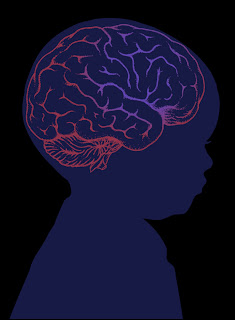
Damage to the parietal lobe, cerebellum, corpus callosum and basal ganglia are the probable reasons for DCD.
Parietal lobe:
- Poor visual spatial processing
- Motor imagery
- Facial emotion recognition
Cerebellum:
-Finger-to-nose touching rapid alternating hand movements
-Timing of muscle recruitment
-Poor anticipatory postural activity
-Poor motor adaptation attributed to
cerebellum
Corpus callosum:
-Inter-sensory & intra-sensory modality
matching in children with and without
eye–hand coordination problems
-Corpus callosum is smaller as in ADHD
Basal Ganglia:
-Weak evidence
-‘‘Soft’’ neurological signs of basal ganglia
dysfunction had difficulty in modulating
force of movement.
Impairments
in children with DCD:

Physical therapy assessment:
Chief complaints:
- ·
Academic failure?
- ·
Difficulty in performing complex or fine movements?
- ·
Parental observation
- ·
Co-existence of ADHD, learning difficulty?
- ·
Family member having a similar diagnosis
- ·
Difficulty in interacting with or coping with peer
group?
- ·
Reading difficulty?
History of present illness:
x Antenatal, natal and postnatal history?
x
Is the child preterm?
x
Is he developing normally?
x
Is there any family member exhibiting same issues?
x
Since when is child presenting these signs?
x
Does he/she have any visual or movement problems?
x
What does your child’s progress report say?
x
Is he able to tie shoe lace? Is he able to write and
read?
x
Is he responding sluggish?
x
Are there any behavioral problems?
On Observation:
• Child’s
behavior
• Gait
• Posture
• Fine
motor activities
• Writing
• Dysmorphic
features
On Examination:

Physical therapy Management:
SENSORY INTEGRATION
i. Aimed to improve Sensory System Modulation (SSM) &
Functional Support Capabilities (FSC) which form End Product Ability (EPA)
ü. Organizes the sensory system by providing vestibular,
proprioceptive, auditory, and tactile inputs
iii. “Praxis”- contributing in movement performance
Ability to start/ stop/
sequencing or organizing cognitive actions
TASK SPECIFIC TRAINING

Mia Pless, 2000
NEUROMOTOR TASK TRAINING
ü Task-oriented approach focusing directly on teaching
the skills a child needs in daily life
ü NTT has assessment within a functional setting
ü Determine extent to which motor tasks are performed
below expected level.
ü Determine which cognitive and motor control process
are involved resulting in deficient motor performance
STRENGTH TRAINING
• To
improve neural pathways and motor unit recruitment
• Active
heavy muscle work will facilitate proprioceptive awareness
• Blocked
repetitions of isolated joint movements helps during cognitive stage of
learning
• Core
strengthening for more stability
METRONOME TRAINING
• The
Interactive Metronome is a PC-based, noninvasive technique that requires
participants to practice timing and rhythmicity of varied movements of the
hands and feet in synchrony with auditory cues
• Intended
to improve timing, sequencing, rhythmicity of movements
VIRTUAL REALITY
•
Provides
both cognitive and motor control challenges
•
Targets
balance, posture, coordination and cognition
•
Motor
learning, repetition, augmented feedback, variability
•
Negative
– positive impact

PHYSICAL FITNESS TRAINING
•
Swimming
•
Walking
•
Cycling
•
Aerobics
/ Dance
•
Rock
Climbing
•
Yoga
•
Non
competitive sports
HANDWRITING TRAINING
•
Pencil
grasps
•
Broader
surcease to narrower surface
•
Clear
and one or two word instructions
•
Gross
to precise grasp


•
Properties
of water can be used to develop postural control strategies
•
Improving
balance, reduce postural sway
•
Improve
neuro-motor impairments
•
Improve
motor skills

ROLE OF PARENTS
• Encourage
the child to participate in games and sports that are interesting to him/her
and which provide practice in, and exposure to, motor activities
• Introduce
the child to new sports activities or a new playground on an individual basis
• Ask the
child simple questions to ensure comprehension
• Private
lessons may be helpful at certain points in time to teach the child specific
skills
• Encourage
the child to interact with peers through other activities that are likely to be
successful (cubs, music, drama, or art)
• Not to
compare with other children without DCD
• Acceptance
of the fact
• Not to
overload the child to the limit where he/she will not be able to reach
• Be
patient and interact with them instead of reacting
ENVIRONMENTAL MODIFICATIONS
CLASSROOM
•
One-on-one teaching
•
Step-by-step instructions
•
Separate time to copy notes
•
Extra time at lunch break
•
Non-competitive sport participation
HOME
•
Color coding drawer
•
Easy arrangement for dressing
•
Tool modification for easy use
👧👧👧👧

:) so good.
ReplyDelete👍
ReplyDeleteGreat knowledgeable
ReplyDelete👏👌
Amazing as always👍👍
ReplyDeleteSeriously ma'am very helpful 👍
ReplyDelete👍👍👍👍
ReplyDeleteVery informative.....��
ReplyDelete